
Built around your programme
Expert-led decisions, connected data and a practical route to the next meaningful experiment.
Polyclonal antibodies play a vital role in both research and clinical applications due to their ability to recognise multiple epitopes on a single antigen. This multi-epitope recognition enhances their sensitivity and makes them particularly effective in detecting low-abundance targets, even in complex biological samples.
Polyclonal antibodies play a vital role in both research and clinical applications due to their ability to recognise multiple epitopes on a single antigen. This multi-epitope recognition enhances their sensitivity and makes them particularly effective in detecting low-abundance targets, even in complex biological samples.
Unlike monoclonal antibodies, which are derived from a single B-cell clone and bind to one specific site, polyclonal antibodies are produced by different B-cell lineages, offering broader reactivity and robustness.
Their versatility makes them ideal for use in various assays such as ELISA, Western blotting, immunohistochemistry (IHC), and flow cytometry.
Polyclonal antibodies are quicker and more cost-effective to produce, especially when large quantities are needed, as in the case of bulk supply for diagnostic kits or reagent manufacturing. Their ability to maintain performance across different batches also contributes to their reliability in routine laboratory use.
In summary, polyclonal antibodies are indispensable tools in biotechnology and medicine, offering high sensitivity, broad specificity, and practical advantages in production and application.
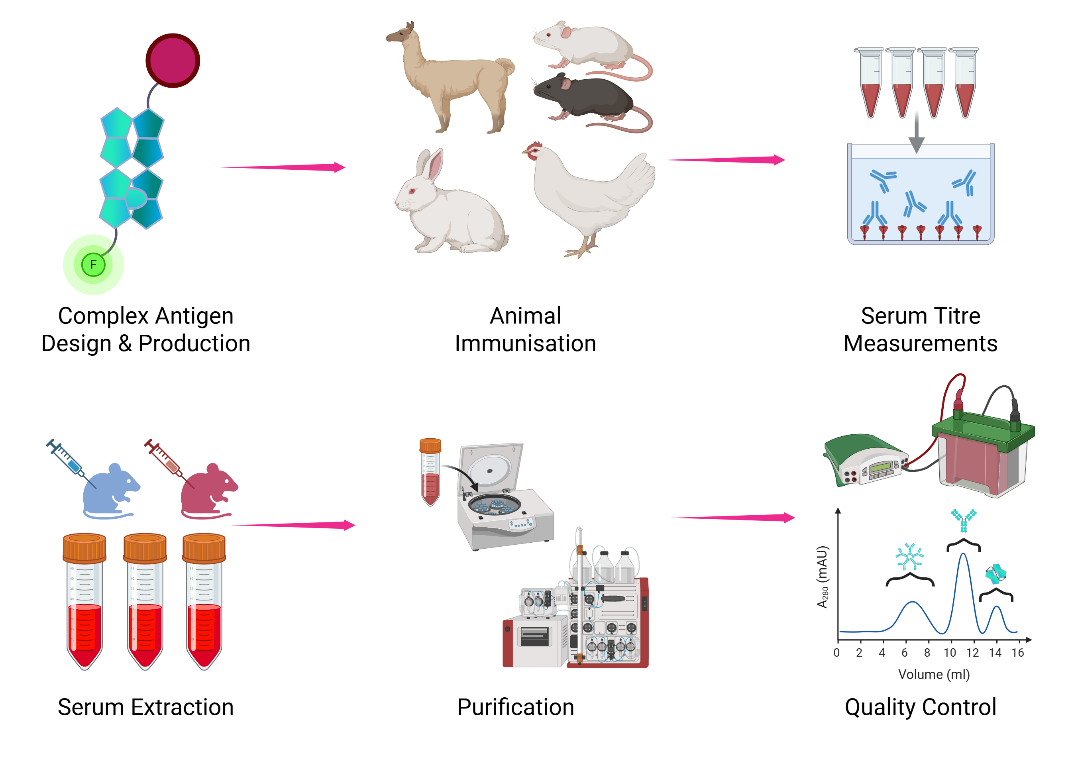
Fig.1 Fusion’s Polyclonal Antibody Generation Process (created with BioRender.com)
At Fusion, we offer a best-in-class polyclonal antibody production platform designed to deliver superior specificity, stability, and performance. Our process is built on several key pillars that set us apart:
Our proprietary antigen design strategies ensure optimal epitope presentation, enhancing immune response and resulting in antibodies with higher affinity and broader reactivity. This precision in design translates to better detection of target molecules, even in complex biological environments.
We support a wide range of expression systems (including bacterial, yeast, insect, and mammalian cells), allowing us to tailor antigen production to the specific needs of each project. This flexibility ensures high-quality antigen yields and preserves native protein structures critical for effective antibody generation.
Fusion offers immunisation across multiple host species such as rabbit, mouse, chicken and camelid, enabling the production of polyclonal antibodies with varied isotypes and binding profiles. This diversity enhances the utility of our antibodies across different assay formats and research applications.
Our purification protocols are meticulously refined to isolate high-purity antibodies while preserving functional integrity. Techniques such as affinity chromatography and multi-step polishing ensure that the final product is both specific and stable, reducing background noise and improving reproducibility in downstream applications.
Together, these capabilities make the Fusion Platform a trusted choice for researchers and diagnostic developers seeking reliable, high-performance polyclonal antibodies.
Our antibodies consistently deliver the sensitivity and robustness required for cutting-edge science.
Expert-led decisions, connected data and a practical route to the next meaningful experiment.
Start with the biology, share the context and move forward with confidence.
Yes. Our teams are designed to share context across discovery, engineering and supply.
Share the useful starting details and your enquiry will be sent securely to Fusion’s scientific team.